
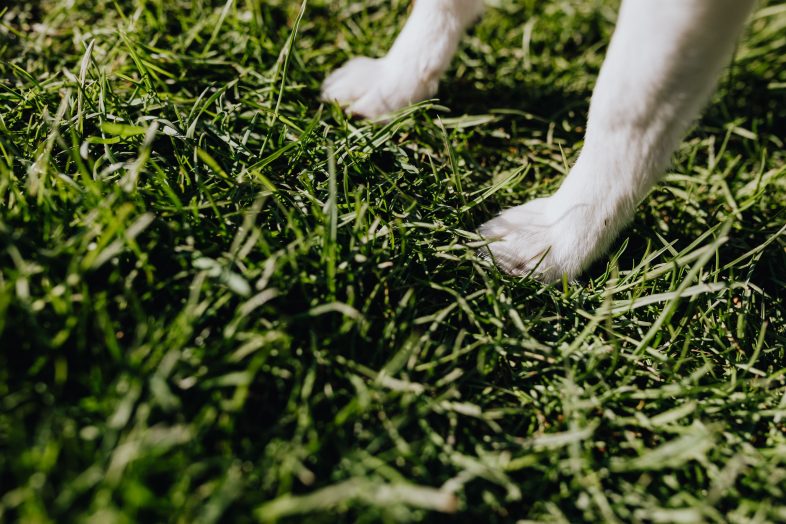
“Why does my dog eat grass?” is one of those questions almost every dog guardian seems to ask eventually. Some dogs delicately graze on a few fresh blades during a walk. Others appear to seek grass out with much more urgency. The behaviour can look strange, particularly when it is followed by vomiting.
The important point is that grass eating does not have one proven explanation. Current veterinary and behavioural sources describe several plausible reasons, and the scientific literature suggests that plant eating is a widespread behaviour in domestic dogs.
How common is it for dogs to eat grass?
A frequently cited study published in Applied Animal Behaviour Science in 2008 investigated plant-eating in dogs. In a smaller survey of healthy dogs with regular plant access, 79% of owners reported that their dogs ate grass or other plants. In a larger survey focused on plant-eating dogs, 68% were reported to eat plants daily or weekly, grass was the most commonly eaten plant, only 9% were reported to frequently appear ill before eating plants, and only 22% frequently vomited afterwards.
The researchers concluded that plant eating appears to be a normal behaviour for many domestic dogs. That does not mean every episode should be ignored, but it does challenge the assumption that a dog eating grass must automatically be sick.
Why do dogs eat grass?
1. It may simply be normal foraging behaviour
Some dogs seem to enjoy the taste, texture or act of grazing. PetMD's veterinary-reviewed 2026 guidance notes that the exact reason remains uncertain and that normal or instinctive behaviour is one of the leading explanations.
2. Hunger and timing may influence it
Research discussed in veterinary sources suggests grass eating can vary with hunger and time of day. Some dogs may be more likely to graze before a meal than afterwards. That does not prove hunger is the universal cause, but it is one useful pattern to observe in your own dog.
3. Curiosity and learned behaviour may play a role
Dogs explore the world with their mouths. Younger dogs in particular may sample plants as part of normal investigation. A behaviour can also become learned if eating grass reliably produces an interesting response from the person — being chased away, receiving food as a distraction or getting intense attention.
4. Boredom or lack of enrichment may contribute in some dogs
A dog left alone in a garden with very little to do may graze as one available activity. In that situation, increasing appropriate enrichment, social contact, sniffing, play and other outlets may reduce the behaviour.
5. Diet and fibre are possible factors, but the evidence is limited
One published case report described a dog with long-term plant eating and vomiting whose behaviour resolved after a higher-fibre diet was introduced. A single case does not prove that grass eating generally means a fibre deficiency. Dogs eating a complete and balanced diet should not automatically be assumed to have a nutritional problem. If you are concerned about diet, discuss it with your veterinarian rather than adding supplements at random.
6. Gastrointestinal discomfort is possible in some dogs — but the story is not simple
Owners often report that a dog appears nauseous, rushes outside, eats grass and then vomits. That pattern deserves attention. At the same time, research does not show that gastrointestinal upset explains ordinary grass eating in most dogs. A 2010 experimental study found that dogs with a mild induced gastrointestinal disturbance did not increase grass eating, and vomiting events were uncommon.
So the responsible conclusion is not “grass eating always means nausea” or “grass eating never means nausea”. Context matters.
Do dogs eat grass to make themselves vomit?
Probably not in most cases.
The 2008 plant-eating study found that frequent vomiting after plant eating was reported in only about 22% of the dogs surveyed, while frequent signs of illness beforehand were reported in only 9%. PetMD's current veterinary review likewise states that most dogs do not appear to eat grass specifically to make themselves vomit.
A dog can certainly vomit after eating grass. Long blades may irritate the stomach or throat, and a dog that was already nauseous may eat grass and then vomit. What the evidence does not support is the simple claim that grass is routinely used by healthy dogs as a deliberate emetic.
Is eating grass bad for dogs?
The grass itself is not always the main concern. What may be on or around it can matter more.
Pesticides, herbicides and other chemicals
Do not allow a dog to eat grass that may have been recently treated with lawn chemicals, pesticides, insecticides or herbicides unless the product has been confirmed safe under the relevant conditions. PetMD advises veterinary assessment when pesticide exposure is suspected.
Faecal contamination and parasites
Grass in parks, verges and communal dog areas may be contaminated with faecal material. Veterinary sources note that this can expose dogs to pathogens and intestinal parasite stages. Good preventive veterinary care and avoiding obviously contaminated areas reduce risk.
Toxic plants mixed with grass
Do not assume every green plant is safe because ordinary lawn grass is usually tolerated. Gardens and public spaces can contain toxic ornamental plants, mushrooms and other material a dog should not eat.
Large quantities and foreign material
Eating a large amount of long grass or mixing grass with sticks, stones, fabric or other non-food objects can increase the risk of gastrointestinal problems. Persistent eating of non-food items is more consistent with pica and should be assessed.
When should I worry about my dog eating grass?
Contact your veterinarian if grass eating is sudden, markedly increased or accompanied by signs that your dog is unwell.
Seek veterinary advice particularly when you see:
- repeated or persistent vomiting;
- diarrhoea that persists or is severe;
- reduced appetite or refusal to eat;
- lethargy, weakness or a clear change in normal behaviour;
- weight loss;
- abdominal discomfort or bloating;
- repeated frantic attempts to eat grass;
- ongoing pica or consumption of other non-food items; or
- possible exposure to pesticides, herbicides, toxic plants or another toxin.
If your dog is repeatedly vomiting, appears seriously unwell, has a swollen or painful abdomen, collapses, or you suspect poisoning, do not wait for a behaviour explanation — seek urgent veterinary care.
Should I stop my dog from eating grass?
If your dog occasionally grazes a small amount of untreated, uncontaminated grass and remains completely well, it may not be necessary to turn every blade of grass into a battle.
It is sensible to interrupt or prevent the behaviour when:
- you do not know whether the lawn has been treated with chemicals;
- the area is heavily contaminated with dog faeces;
- the dog is eating large amounts;
- the dog is swallowing long clumps rather than nibbling;
- the dog is also eating dangerous non-food objects; or
- your veterinarian has advised you to prevent it while investigating a health problem.
How to stop a dog from eating grass without punishment
Use management and reinforcement rather than confrontation. Keep the dog on lead in risky areas, move away from treated lawns, reward a voluntary check-in or “leave” response, and offer an appropriate alternative activity. PetMD recommends calm interruption and positive reinforcement of another behaviour rather than scolding.
If boredom appears to be part of the pattern, increase appropriate enrichment: sniffing walks, food-search games, safe chewing, play, training and social interaction. If grass eating appears compulsive or your dog persistently eats a range of non-food items after medical causes have been investigated, a qualified behaviour professional can help assess the wider pattern.
Is the grass eating part of a wider behaviour concern?
If your veterinarian has ruled out medical causes and your dog is showing persistent pica, compulsive foraging, anxiety or another behavioural pattern, a qualified behaviour consultant can help you look at the whole picture.
Find a PPC-SA professionalFrequently asked questions about dogs eating grass
Why does my dog eat grass and then throw up?
Some dogs do vomit after eating grass, but research suggests most dogs do not eat grass specifically in order to vomit. If vomiting is repeated, the dog seems nauseous before grazing, or the pattern is new, ask your veterinarian to assess the dog.
Why is my dog suddenly eating lots of grass?
A sudden increase is more important than an occasional long-standing habit. Changes in appetite, gastrointestinal comfort, routine, stress or behaviour can all be relevant. If the increase is marked or accompanied by illness, arrange a veterinary assessment.
Does eating grass mean my dog has worms?
Grass eating on its own does not diagnose intestinal worms. Grass and soil can, however, be contaminated with parasite stages from animal faeces. Your veterinarian can advise on appropriate parasite prevention and faecal testing for your dog.
Does my dog need more fibre if they eat grass?
Not necessarily. There is limited evidence that dietary fibre can matter in some individual cases, but ordinary grass eating is common even in dogs fed complete diets. Do not diagnose a deficiency from grass eating alone; discuss persistent concerns with your veterinarian.
Is grass safe for puppies?
Puppies may explore grass with their mouths, but they are also vulnerable to infections and parasites in contaminated environments and may ingest other objects along with the grass. Supervise closely and follow your veterinarian's advice about safe outdoor exposure and preventive health care.
References & further reading
- Sueda KLC, Hart BL, Cliff KD. Characterisation of plant eating in dogs. Applied Animal Behaviour Science. 2008;111(1–2):120–132.
- McKenzie SJ, Brown WY, Price IR. Reduction in grass eating behaviours in the domestic dog in response to a mild gastrointestinal disturbance. Applied Animal Behaviour Science. 2010;123(1–2):51–55.
- PetMD. Wailani Sung, MS, PhD, DVM, DACVB; reviewed by Barri J. Morrison, DVM. Why Do Dogs Eat Grass? Updated 5 March 2026.
- VCA Animal Hospitals. Why Dogs Eat Grass.
- American Kennel Club. Why Does My Dog Eat Grass?
This article is educational and is not veterinary diagnosis or treatment. Grass eating can be normal, but it can also occur alongside illness. If your dog is unwell, the appropriate first contact is a veterinarian. PPC-SA's role is within South Africa's non-clinical companion-animal sector.